Automotive PCB Market: Trends, Growth, and Future Outlook
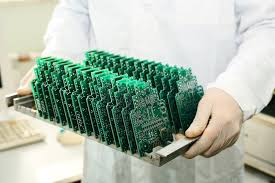
In today’s fast-evolving automotive industry, electronic components play a crucial role in defining performance, safety, and user experience. At the heart of these electronic systems lies the automotive PCB market, which serves as the backbone for modern vehicle electronics. From infotainment systems to advanced driver assistance systems (ADAS), printed circuit boards (PCBs) are transforming how vehicles operate, communicate, and respond.
This article explores the current landscape, key trends, challenges, and future prospects of the automotive PCB market — offering insights into what’s driving its rapid growth and what to expect in the coming years.
What Is the Automotive PCB Market?
The automotive PCB market refers to the industry segment dedicated to designing, producing, and supplying printed circuit boards specifically for automotive applications. PCBs provide electrical connections between various components in vehicles, ensuring that complex electronic systems function efficiently and reliably.
In vehicles, PCBs are used in areas such as:
Engine control modules (ECM)
ADAS (Advanced Driver Assistance Systems)
Powertrain and transmission systems
Infotainment and navigation systems
Electric vehicle battery management
Lighting and safety systems
As cars become increasingly electrified and connected, the demand for high-performance, durable, and heat-resistant PCBs continues to rise.
Market Overview and Growth Dynamics
The global automotive PCB market has experienced substantial growth in recent years, driven by several key factors. According to industry projections, the market is expected to expand steadily through 2030, supported by innovations in electric vehicles (EVs), automation, and connected technologies.
Key Growth Drivers
Rising Electric Vehicle (EV) Production
EVs rely heavily on advanced electronics for power management, battery control, and safety. PCBs are critical in managing the high-voltage systems within these vehicles, fueling market demand.
Adoption of ADAS and Smart Safety Features
Modern cars now include lane departure warnings, automatic braking, and adaptive cruise control — all powered by complex PCB systems.
Increasing Demand for Infotainment and Connectivity
Consumers expect smart, connected, and user-friendly dashboards. PCBs enable seamless integration of multimedia, navigation, and wireless communication systems.
Miniaturization and High-Density Interconnect (HDI) Technology
As vehicles get smaller and more efficient, PCB designs are evolving toward compact, multi-layer structures that can handle greater electrical complexity.
Growing Focus on Autonomous Vehicles
The move toward self-driving cars requires extensive sensor networks, radar, and processing units — all built around advanced PCB architectures.
Segmentation of the Automotive PCB Market
The market can be segmented based on type, application, vehicle type, and region.
By Type
Single-Sided PCB: Basic, cost-effective boards used for simple electronic controls.
Double-Sided PCB: Used in moderately complex systems like lighting and wipers.
Multi-Layer PCB: Essential for complex functions like navigation, sensors, and EV management.
Rigid-Flex PCB: Combines flexibility and durability for compact spaces, common in EVs and ADAS modules.
By Application
| Application | Description |
|---|---|
| Powertrain | Manages engine and transmission control systems |
| Safety & Security | Supports airbag, ABS, and collision detection systems |
| Body Electronics | Handles lighting, HVAC, and power windows |
| Infotainment | Enables audio, video, and display units |
| ADAS | Powers radar, cameras, and autonomous driving sensors |
By Vehicle Type
Passenger Cars – Major revenue contributor due to high demand for infotainment and safety systems.
Commercial Vehicles – Increasing use of telematics and fleet monitoring systems.
Electric Vehicles (EVs) – Fastest-growing segment, driven by electrification trends.
By Region
The automotive PCB market spans across:
Asia-Pacific (APAC): The largest market due to strong automotive manufacturing in China, Japan, and South Korea.
Europe: Driven by luxury automakers and EV adoption.
North America: Growth supported by technological innovation and EV initiatives.
Rest of the World: Emerging opportunities in Latin America and the Middle East.
Emerging Technologies Shaping the Market
Technological advancements are redefining the performance and reliability of automotive PCBs. Here are some innovations shaping the market’s future:
Flexible and Rigid-Flex PCBs
These PCBs are designed to fit into tight spaces and withstand vibration — ideal for compact EV designs.
High-Frequency and High-Speed PCBs
Used in radar and communication systems, these boards support high-speed data transfer required for ADAS and connected vehicles.
Thermal Management Solutions
As automotive electronics generate more heat, new PCB materials with better thermal dissipation are being developed to enhance performance and longevity.
Miniaturization and HDI Technology
High-density interconnects allow more components in smaller areas, supporting the miniaturization of vehicle electronics.
Environmentally Friendly Materials
Sustainability is a growing priority. Manufacturers are exploring eco-friendly laminates and lead-free soldering techniques.
Key Market Trends
Shift Toward Electric and Hybrid Vehicles
Electrification is the most significant driver in the automotive PCB market. With more EVs hitting the road, demand for complex PCBs for battery control and charging systems continues to surge.
Integration of AI and IoT
Artificial intelligence and Internet of Things (IoT) are enabling smarter vehicle electronics — from predictive maintenance to driver behavior analysis.
Lightweight and Compact PCB Designs
Automakers are adopting lightweight PCBs to improve vehicle efficiency and reduce overall emissions.
Increased Use of Advanced Materials
New materials such as polyimide and ceramic-based substrates are improving performance in high-temperature environments.
Focus on Safety and Reliability
As automotive systems become more digital, PCBs must meet stringent safety and performance standards, such as ISO 26262 for functional safety.
Challenges in the Automotive PCB Market
While opportunities abound, the automotive PCB market also faces some significant challenges:
High Manufacturing Costs: Advanced PCB designs require expensive materials and precision processes.
Thermal Management Issues: Managing heat in high-power systems remains a challenge.
Complex Design Requirements: Modern vehicles require multi-functional PCBs with strict reliability standards.
Supply Chain Disruptions: Shortages of semiconductor and substrate materials can affect production timelines.
Environmental Regulations: Meeting global environmental standards adds to manufacturing costs.
Leading Companies in the Automotive PCB Market
Several key players dominate the global landscape, investing heavily in R&D to maintain competitiveness:
TTM Technologies Inc.
KCE Electronics Public Company Ltd.
Aoshikang Technology Co., Ltd.
AT&S Austria Technologie & Systemtechnik AG
Nippon Mektron Ltd.
Sumitomo Electric Industries Ltd.
Unimicron Technology Corp.
Shennan Circuits Co., Ltd.
These companies focus on innovations such as HDI PCBs, advanced multilayer boards, and environmentally sustainable solutions.
Future Outlook: What’s Next for the Automotive PCB Market?
The future of the automotive PCB market looks promising, with major transformations expected in the next decade.
Key Predictions:
Rise of Electric Mobility
EV sales are projected to account for more than half of new vehicle sales by 2030, boosting PCB demand exponentially.
Growth of Autonomous Driving Systems
As self-driving technology matures, vehicles will rely more on radar, lidar, and vision systems — all powered by sophisticated PCBs.
Smart Manufacturing and Automation
PCB production is becoming more automated, ensuring better quality control and faster production cycles.
Sustainability Initiatives
Eco-friendly PCBs made from recyclable materials will gain traction, aligning with global green manufacturing goals.
Integration of 5G and V2X Communication
The rollout of 5G networks and vehicle-to-everything (V2X) communication will increase the complexity and demand for high-speed automotive PCBs.
Regional Insights
Asia-Pacific: The Powerhouse of Production
China, Japan, and South Korea lead global production due to a robust automotive ecosystem, strong EV policies, and advanced PCB manufacturing facilities.
Europe: Pioneering Innovation and Sustainability
European automakers are focusing on green mobility, luxury electric vehicles, and safety systems, pushing demand for high-quality, eco-friendly PCBs.
North America: Technology and Research Hub
The U.S. and Canada are investing heavily in autonomous vehicle R&D, driving innovation in PCB design and material science.
Opportunities for New Entrants and Investors
The growing complexity of automotive electronics opens doors for new businesses and investors. Key opportunities include:
Supplying PCBs for EV battery systems
Developing lightweight and heat-resistant substrates
Offering design automation software for automotive PCB layouts
Partnering with OEMs for sustainable and recyclable PCB solutions
Conclusion
The automotive PCB market is at the heart of the global shift toward smarter, safer, and more sustainable mobility. As vehicles become increasingly connected, autonomous, and electrified, the demand for high-performance PCBs will continue to surge.
Manufacturers that embrace innovation, quality, and sustainability will lead the next wave of transformation in this fast-growing industry.
Whether you’re an investor, engineer, or automotive enthusiast, one thing is clear — the future of driving is powered by the evolution of the automotive PCB market.














Post Comment