Carney vs Poilievre: A Deep Dive Into Two Visions for Canada’s Future
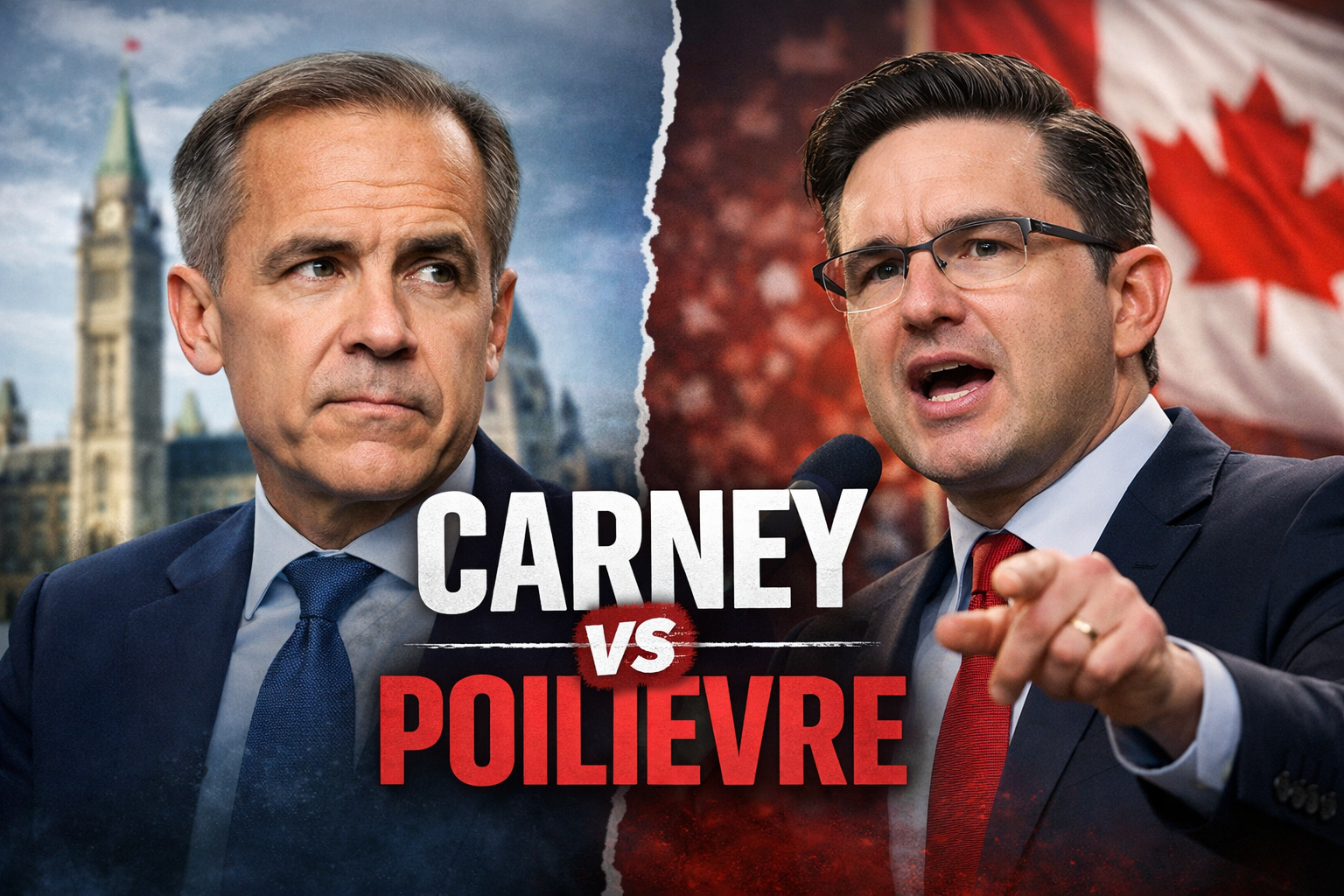
The phrase “Carney vs Poilievre” has become one of the most intriguing political matchups discussed in Canadian public discourse. Even though these two figures come from very different professional backgrounds and political philosophies, comparing them reveals a much larger debate about Canada’s economic direction, governance style, and place in the global order. At its core, this comparison is not just about personalities—it’s about competing visions for what Canada should prioritize in the coming decades.
Mark Carney represents a globally minded, institution-driven approach rooted in economics, financial stability, and international cooperation. Pierre Poilievre, on the other hand, embodies a populist, grassroots-oriented political style that emphasizes affordability, individual freedom, and skepticism of centralized authority. Together, they symbolize two powerful but contrasting narratives shaping Canadian politics.
This article takes a comprehensive, expert-level look at Carney vs Poilievre, examining their backgrounds, economic philosophies, leadership styles, policy priorities, communication strategies, and long-term implications for Canada. Rather than framing this as a simple rivalry, we explore how each figure reflects broader ideological currents within the country.
Understanding the Context Behind “Carney vs Poilievre”
The comparison between Mark Carney and Pierre Poilievre didn’t emerge by accident. It reflects growing public interest in alternative leadership paths at a time when Canadians are increasingly concerned about inflation, housing affordability, climate change, and economic resilience. As traditional party lines blur, voters are paying closer attention to ideas rather than just party labels.
Mark Carney is often discussed as a potential political leader because of his deep experience managing economic crises at the highest levels. His background in central banking and global finance places him in a category rarely seen in electoral politics. Many Canadians see him as a steady, technocratic figure capable of navigating complex global challenges.
Pierre Poilievre, by contrast, is a career politician who has spent decades sharpening his message inside Parliament. He has built a loyal following by directly addressing cost-of-living pressures and positioning himself as a critic of political elites. The Carney vs Poilievre conversation reflects a broader tension between expert-driven governance and populist accountability.
Mark Carney: Background, Education, and Global Influence
Mark Carney’s professional journey is one of the most internationally distinguished in modern Canadian public life. Educated at Harvard University and later earning a doctorate at Oxford, Carney built a reputation early on as a highly disciplined economic thinker. His academic background laid the foundation for a career deeply embedded in global financial systems.
Carney rose to prominence as the Governor of the Bank of Canada during the 2008 global financial crisis. Under his leadership, Canada weathered the storm better than many peer nations, an achievement that significantly boosted his credibility both at home and abroad. His calm, data-driven approach became a case study in crisis management.
Later, as Governor of the Bank of England, Carney navigated Brexit-era uncertainty, further solidifying his reputation as a steady hand in turbulent times. This global experience is a major reason why the “Carney” side of Carney vs Poilievre appeals strongly to voters who prioritize international credibility and long-term economic planning.
Pierre Poilievre: Political Roots and Parliamentary Rise
Pierre Poilievre’s career follows a very different trajectory, grounded almost entirely in domestic politics. First elected to Parliament at a young age, Poilievre quickly established himself as a sharp debater and effective communicator. His rise through the Conservative Party was fueled by a reputation for relentless questioning and message discipline.
Unlike Carney’s technocratic background, Poilievre’s expertise comes from political combat and public engagement. He has spent years challenging government spending, central banking decisions, and regulatory expansion. This experience has shaped his identity as a politician who thrives in adversarial settings.
For many Canadians, Poilievre represents familiarity and accessibility. He speaks in direct language, avoids technical jargon, and frames complex economic issues in everyday terms. In the Carney vs Poilievre discussion, this contrast between academic authority and political instinct is one of the most defining differences.
Economic Philosophy: Stability vs Disruption
One of the clearest distinctions in Carney vs Poilievre lies in how each approaches economic policy. Carney’s worldview is built on systemic stability, risk management, and long-term planning. He often emphasizes the importance of resilient financial institutions, coordinated global action, and measured reforms.
Carney believes markets function best when supported by strong institutions and clear regulatory frameworks. His approach tends to prioritize preventing crises over reacting to them. This philosophy appeals to those who value predictability and gradual change, especially in uncertain global environments.
Poilievre, by contrast, favors economic disruption as a means of correction. He frequently argues that excessive regulation, government intervention, and central bank policies distort markets and hurt ordinary Canadians. His economic messaging focuses on reducing barriers, cutting taxes, and restoring what he sees as market discipline. This ideological divide sits at the heart of Carney vs Poilievre.
Inflation and Cost of Living: Competing Diagnoses
Inflation has become one of the most urgent issues driving the Carney vs Poilievre debate. Carney typically frames inflation as a complex phenomenon influenced by global supply chains, energy markets, and geopolitical instability. His analysis stresses the importance of coordinated monetary and fiscal responses.
From Carney’s perspective, inflation control requires patience, institutional independence, and careful calibration of interest rates. He often warns against oversimplifying the problem or politicizing central banking decisions. This view resonates with economists and policy professionals.
Poilievre takes a more confrontational stance. He frequently attributes inflation to excessive government spending and what he describes as reckless monetary policy. His messaging connects inflation directly to housing costs, grocery prices, and declining purchasing power, making the issue highly personal for voters. In Carney vs Poilievre, inflation becomes a debate between structural analysis and political accountability.
Housing Affordability: Structural Reform vs Market Freedom
Housing affordability is another area where Carney vs Poilievre offers stark contrasts. Carney views housing primarily as a systemic issue influenced by interest rates, urban planning, and long-term investment patterns. He often discusses the need for coordinated public-private solutions to increase supply.
Carney’s approach tends to emphasize planning reform, sustainable development, and financial stability. He acknowledges the role of government in shaping housing markets through policy, infrastructure investment, and regulatory oversight.
Poilievre frames housing as a failure of government interference. He argues that zoning restrictions, slow permitting processes, and bureaucratic inefficiencies have artificially constrained supply. His solution centers on reducing government barriers and empowering the private sector. This difference highlights how Carney vs Poilievre reflects broader ideological disagreements about the role of the state.
Climate Change and Environmental Policy
Climate policy is one of the most philosophically revealing aspects of Carney vs Poilievre. Carney has positioned himself as a strong advocate for integrating climate risk into financial decision-making. He views climate change as not just an environmental issue, but a systemic economic threat.
Carney supports market-based climate solutions, such as carbon pricing and sustainable finance frameworks. He argues that aligning financial incentives with environmental goals can drive innovation while maintaining economic stability. This approach appeals to centrist and globally oriented audiences.
Poilievre is more skeptical of climate policies that increase costs for consumers. While he does not deny environmental challenges, he prioritizes affordability and energy security. His criticism often targets carbon taxes and regulatory mandates. In Carney vs Poilievre, climate policy becomes a debate between long-term risk management and short-term economic relief.
Leadership Style and Decision-Making
Leadership style is another defining factor in Carney vs Poilievre. Carney is often described as calm, analytical, and measured. His communication style reflects his background in institutions where decisions are made through consensus and data analysis.
Carney tends to speak in nuanced terms, acknowledging trade-offs and uncertainties. This style builds trust among experts but can sometimes feel distant to voters seeking emotional connection or clear promises.
Poilievre’s leadership style is energetic, confrontational, and highly rhetorical. He excels at drawing clear lines between himself and his opponents. His decision-making rhetoric emphasizes urgency and moral clarity. This contrast illustrates how Carney vs Poilievre is also a choice between deliberation and decisiveness.
Communication and Public Messaging
Communication strategy plays a huge role in shaping public perception of Carney vs Poilievre. Carney communicates like a policy expert, often using carefully structured arguments supported by data and historical context. His speeches are designed to reassure and inform rather than provoke.
Poilievre’s messaging is designed for maximum reach and emotional impact. He uses social media effectively, speaks in punchy soundbites, and directly addresses voter frustrations. His communication style feels more conversational and combative.
These differences affect how each figure connects with various demographics. Carney appeals strongly to professionals, economists, and internationally minded voters. Poilievre resonates with those who feel ignored by traditional elites. In Carney vs Poilievre, communication style becomes as important as policy substance.
Populism vs Technocracy
At a deeper level, Carney vs Poilievre represents a classic tension between technocracy and populism. Carney embodies the belief that complex societies require expert management and evidence-based policy. He trusts institutions and emphasizes continuity.
Poilievre challenges that worldview by arguing that experts and institutions have failed ordinary people. His populist rhetoric seeks to return power to individuals and communities, often by limiting institutional authority.
Neither approach is inherently right or wrong, but the contrast highlights a fundamental question facing Canada: should governance prioritize expertise or popular accountability? Carney vs Poilievre forces voters to confront this dilemma directly.
Globalism vs National Focus
Mark Carney’s career has been deeply global, shaping his perspective on Canada’s role in the world. He believes Canada benefits from international cooperation, multilateral institutions, and global standards. His outlook reflects confidence in global integration.
Poilievre places greater emphasis on national sovereignty and domestic priorities. While not isolationist, he is more skeptical of international agreements that limit national policy flexibility. He frames many issues in terms of protecting Canadian interests first.
This global vs national focus is another layer of Carney vs Poilievre. It reflects differing beliefs about how interconnected Canada’s future should be with global systems.
Trust in Institutions
Trust in institutions is a recurring theme in the Carney vs Poilievre debate. Carney’s worldview assumes that institutions can be reformed and improved to serve the public good. He emphasizes transparency, accountability, and expertise.
Poilievre often argues that institutions have become self-serving and disconnected from citizens. His rhetoric challenges the legitimacy of centralized authority, particularly when it impacts affordability and freedom.
This difference shapes how each approaches reform. Carney seeks improvement from within; Poilievre advocates disruption from outside. Carney vs Poilievre thus reflects competing theories of institutional change.
Appeal to Different Voter Groups
The Carney vs Poilievre dynamic also highlights differences in voter appeal. Carney tends to attract urban, educated, and globally oriented voters who value stability and expertise. His appeal is strongest among those comfortable with complexity.
Poilievre draws support from voters frustrated with rising costs and perceived government overreach. His message resonates strongly in suburban and rural areas, as well as among younger voters concerned about housing and debt.
These differing coalitions show how Carney vs Poilievre maps onto Canada’s evolving social and economic divides.
Media Representation and Public Perception
Media coverage plays a significant role in shaping the Carney vs Poilievre narrative. Carney is often portrayed as a potential “safe pair of hands,” a reassuring figure during uncertain times. Coverage tends to focus on his credentials and global reputation.
Poilievre receives more polarized coverage. Supporters praise his authenticity and clarity, while critics describe his style as overly aggressive. This polarization fuels engagement but also deepens divisions.
Understanding media dynamics is essential to understanding how Carney vs Poilievre resonates with the public.
Long-Term Vision for Canada
When considering long-term vision, Carney vs Poilievre presents two fundamentally different futures. Carney envisions a Canada that leads through stability, sustainability, and global cooperation. His vision emphasizes resilience and gradual progress.
Poilievre imagines a Canada revitalized through freedom, competition, and reduced government control. His long-term vision focuses on empowerment and affordability.
Both visions address real concerns, but they prioritize different values. Carney vs Poilievre is ultimately a debate about what kind of country Canada wants to become.
Strengths and Weaknesses of Each Approach
Carney’s greatest strength is credibility. His experience inspires confidence in uncertain times. However, his weakness lies in perceived distance from everyday struggles and retail politics.
Poilievre’s strength is connection. He articulates frustration in ways many Canadians recognize. His weakness may be oversimplification of complex issues.
Recognizing these trade-offs is crucial when evaluating Carney vs Poilievre objectively.
Why the Carney vs Poilievre Debate Matters
The significance of Carney vs Poilievre goes beyond individual personalities. It reflects deeper shifts in Canadian politics, economics, and public trust. The debate forces Canadians to examine their priorities and assumptions.
As economic uncertainty, technological change, and global instability continue, the choice between expert-led stability and populist reform becomes increasingly relevant. Carney vs Poilievre captures this moment perfectly.
Regardless of political outcomes, the conversation itself is shaping Canada’s political future.
Final Thoughts on Carney vs Poilievre
In the end, Carney vs Poilievre is not a simple contest of who is better or worse. It is a reflection of competing philosophies about governance, economics, and leadership. Each represents legitimate concerns and aspirations within Canadian society.
Mark Carney offers reassurance through expertise and global experience. Pierre Poilievre offers energy through accountability and disruption. Understanding both helps Canadians make more informed decisions.
As Canada continues to navigate complex challenges, the ideas represented by Carney vs Poilievre will remain central to the national conversation for years to come.














1 comment