American University: A Complete, In-Depth Guide to One of Washington D.C.’s Most Influential Institutions
Introduction: Why American University Still Matters Today
American University is not just another private university tucked into a major U.S. city. It’s an institution with a very specific personality—politically aware, globally focused, academically serious, and deeply tied to the real-world systems of power that shape modern society. Located in Washington, D.C., American University sits at the intersection of education, policy, diplomacy, and culture in a way very few universities can match.
What makes American University especially interesting is that it doesn’t try to be everything to everyone. Instead, it leans hard into its strengths: international relations, public policy, political science, law, communications, and social sciences. Students who thrive here usually care deeply about global issues, social justice, governance, economics, media, or law. This is a campus where conversations about elections, global conflicts, climate policy, and human rights happen casually over coffee.
In this article, we’ll take a comprehensive look at American University—its history, academics, campus life, admissions, student culture, career outcomes, and overall reputation. Whether you’re a prospective student, a parent, an education researcher, or just curious about how American University stacks up, this guide covers it all in depth.
The History and Founding of American University
American University was founded in 1893 with a mission that was ambitious even by today’s standards. The original vision was to create an institution that blended rigorous academic scholarship with public service and national leadership. From the beginning, the university aimed to educate students who would go on to influence public affairs, government, and global institutions.
The university officially opened its doors to students in 1914, and its early years were closely tied to Washington, D.C.’s expanding role as a global political center. As the U.S. government grew in size and influence during the 20th century, American University grew alongside it, adapting its programs to meet the evolving needs of policymakers, diplomats, journalists, and analysts.
Over time, American University transitioned from a small, idealistic institution into a respected private research university. Its growth wasn’t driven by massive sports programs or flashy expansions, but rather by strategic academic investments and faculty recruitment. Today, the school’s historical commitment to public service and global engagement remains one of its defining characteristics.
American University’s Location: The Power of Washington, D.C.
Location is not just a bonus for American University—it’s a core feature of the academic experience. Being based in Washington, D.C. gives students direct access to government agencies, international organizations, think tanks, embassies, nonprofits, and media outlets. This proximity turns internships and professional networking into a normal part of student life rather than a special opportunity.
Students often intern on Capitol Hill, at the State Department, World Bank, International Monetary Fund, or global NGOs while still attending classes full-time. This creates a feedback loop where theory learned in the classroom is immediately tested in real-world environments. Few universities can offer this level of professional immersion without requiring students to relocate or take gap semesters.
Beyond internships, D.C. itself acts as an extended classroom. Guest speakers include sitting senators, diplomats, journalists, policy advisors, and international leaders. Public lectures, political protests, court hearings, and international summits are all part of the city’s daily rhythm, making learning feel immediate and alive rather than abstract.
Academic Philosophy and Teaching Style at American University
American University places a strong emphasis on interdisciplinary learning. Rather than isolating subjects into rigid silos, many programs encourage students to explore how politics, economics, culture, law, and communication intersect. This approach reflects the messy, interconnected nature of real-world problems.
Class sizes at American University are generally smaller compared to large public universities. This allows for discussion-based learning, close interaction with professors, and a seminar-style atmosphere in many courses. Professors often bring professional experience from government agencies, international organizations, or research institutions, which adds practical depth to their teaching.
Another defining feature of American University’s academic culture is its focus on ethical leadership and social impact. Courses frequently address questions of responsibility, equity, sustainability, and global justice. Students are encouraged not just to succeed professionally, but to think critically about the broader consequences of their work.
Colleges and Schools Within American University
American University is organized into several colleges and schools, each with its own identity and academic focus. One of the most well-known is the School of International Service (SIS), which consistently ranks among the top international relations schools in the world. SIS attracts students from across the globe who are interested in diplomacy, security, development, and global governance.
The School of Public Affairs (SPA) is another flagship component of the university. It offers strong programs in political science, public administration, public policy, and justice studies. Many SPA students go on to careers in government, policy research, advocacy, or law.
Other notable schools include the Kogod School of Business, known for its focus on sustainability and ethical business practices, the School of Communication, which excels in journalism and media studies, and the Washington College of Law, which has a national reputation in areas like international law and human rights.
Popular Majors and Academic Programs
American University is best known for majors related to politics, international affairs, and public service. International Relations, Political Science, Public Policy, and Global Studies are among the most popular choices, reflecting the university’s location and institutional strengths.
Communication-related majors, including journalism, public relations, and media production, are also highly regarded. Students benefit from hands-on opportunities, internships with major media outlets, and access to experienced professionals working in the heart of the U.S. media landscape.
Business, economics, psychology, sociology, and environmental studies are also strong offerings. While American University may not be a traditional STEM powerhouse, it excels in fields that blend analytical thinking with human-centered problem-solving and policy awareness.
Research and Intellectual Contributions
American University may not be as research-heavy as some large public institutions, but it still plays a meaningful role in policy-oriented research. Faculty members are often involved in applied research projects that influence public debates, legislation, and international policy frameworks.
Research at American University frequently focuses on real-world impact rather than purely theoretical outcomes. Topics such as climate change policy, human rights law, economic inequality, international security, and media ethics are common areas of focus.
Students, including undergraduates, often have opportunities to assist with research projects, co-author papers, or present findings at conferences. This exposure helps students develop analytical skills and professional credibility early in their academic careers.
Campus Life and Student Culture
Campus life at American University is shaped by its politically active and socially engaged student body. Students tend to be outspoken, informed, and passionate about issues ranging from climate change to racial justice to international conflict. Political discussions are common, but they are usually thoughtful rather than hostile.
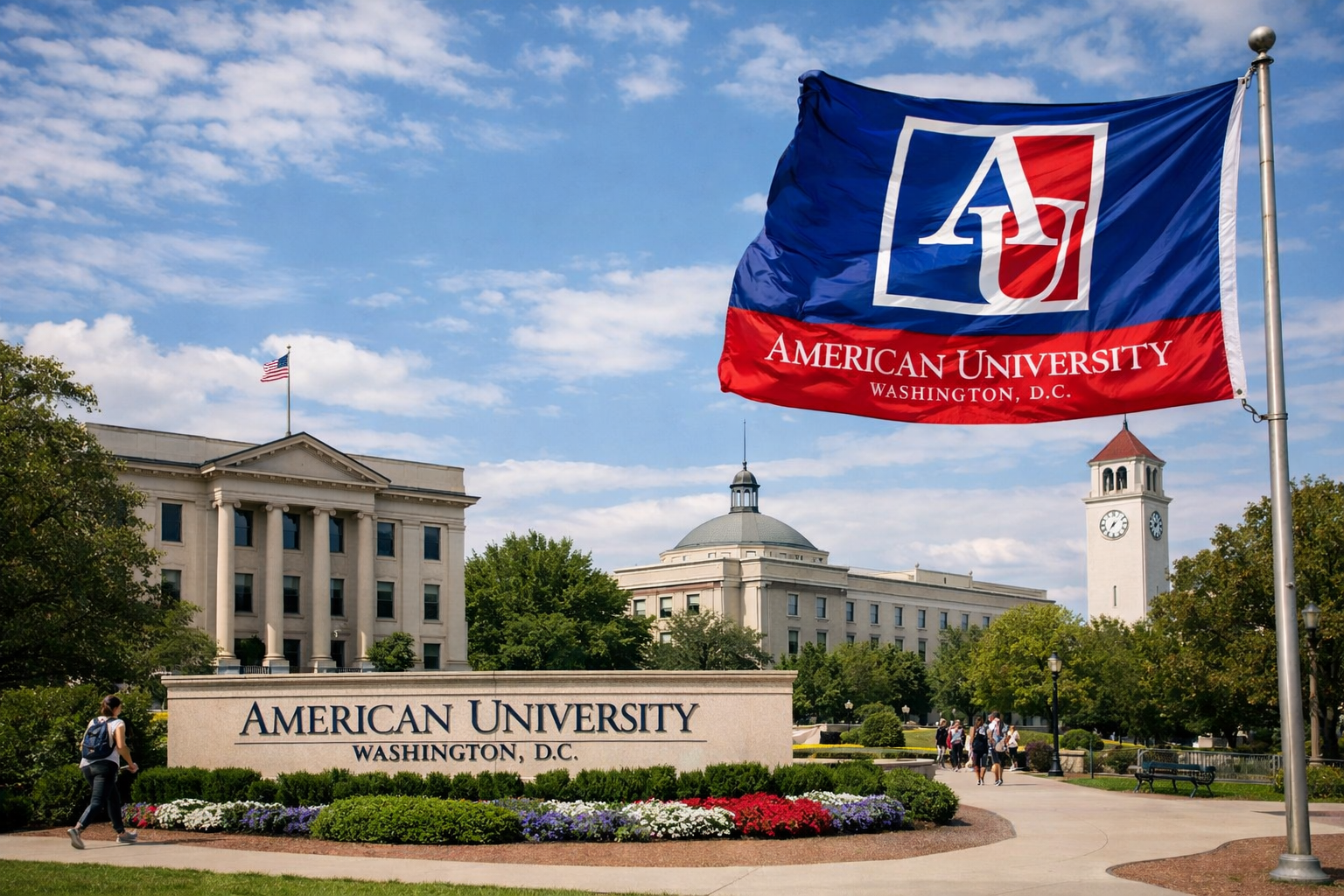
The campus itself is relatively compact and located in a residential part of northwest Washington, D.C. It offers a quieter environment compared to downtown, while still being well-connected via public transportation. Students often describe the campus as clean, green, and community-oriented.
Clubs and student organizations are abundant, covering everything from debate teams and cultural associations to advocacy groups and professional societies. Many students are involved in activism, volunteering, or policy-related organizations that align with their academic interests.
Diversity and International Community
American University is known for its diverse student population. Students come from all 50 U.S. states and more than 130 countries, creating a genuinely international campus environment. This diversity enriches classroom discussions and exposes students to a wide range of perspectives.
The university actively promotes inclusion and global engagement through scholarships, international partnerships, and exchange programs. International students are a visible and valued part of campus life, particularly within programs like international relations and global studies.
Cultural events, language programs, and global festivals are common, reinforcing the idea that American University is not just studying the world—it’s actively engaging with it on campus.
Admissions Process and Acceptance Rate
American University has a moderately selective admissions process. While it is not as competitive as Ivy League institutions, it still attracts a strong applicant pool, particularly for its flagship programs. The acceptance rate typically falls in the mid-range for private universities, reflecting a balance between accessibility and academic rigor.
Admissions decisions are holistic, meaning they consider more than just test scores and grades. Essays, extracurricular involvement, leadership experience, and demonstrated interest in public service or global issues all play an important role.
Applicants who clearly articulate why American University fits their academic and career goals tend to stand out. The admissions team looks for students who will actively engage with the university’s mission rather than simply attend classes.
Tuition, Financial Aid, and Scholarships
As a private institution, American University’s tuition is relatively high. However, the university offers a wide range of financial aid options, including merit-based scholarships, need-based grants, and work-study opportunities.
Many students receive some form of financial assistance, which helps make the cost more manageable. The university has made public commitments to increasing affordability and reducing student debt, particularly for students from underrepresented backgrounds.
While the sticker price can be intimidating, students often justify the cost by pointing to the career access, internship opportunities, and professional networks that come with studying in Washington, D.C.
Career Outcomes and Alumni Network
American University graduates tend to do well in fields related to government, international organizations, law, media, and nonprofits. Many alumni work in federal agencies, international NGOs, consulting firms, and major media outlets.
The university’s career center plays an active role in connecting students with internships and job opportunities. Resume workshops, networking events, and alumni panels are common, and students are encouraged to start career planning early.
American University’s alumni network is particularly strong in Washington, D.C., which can be a major advantage for graduates seeking to build careers in policy or public service.
Study Abroad and Global Opportunities
Global engagement is deeply embedded in American University’s identity. The university offers numerous study abroad programs, exchange partnerships, and international internships across Europe, Asia, Africa, and Latin America.
Many programs are designed to integrate academic coursework with experiential learning, allowing students to study global issues while immersed in relevant cultural contexts. This approach aligns with the university’s emphasis on practical, real-world education.
Students often report that studying abroad through American University is a transformative experience that enhances both their academic understanding and personal growth.
Sustainability and Social Responsibility
American University has positioned itself as a leader in campus sustainability. The university has invested in renewable energy, sustainable building practices, and environmentally conscious policies.
Sustainability is not just an operational goal—it’s also an academic focus. Courses and research projects related to environmental policy, climate change, and sustainable development are widely available.
This commitment reflects the broader values of the institution, which emphasizes ethical leadership and long-term social impact.
Strengths and Criticisms of American University
One of American University’s greatest strengths is its location and mission alignment. Students who are passionate about public service, policy, and global issues often find the university to be an ideal fit.
However, the university is not without criticism. Some students feel that the political culture can be overwhelming or ideologically narrow at times. Others point to the high cost of tuition as a significant drawback.
Like any institution, American University works best for students whose interests and values align with its core strengths and academic focus.
Who Should Consider American University?
American University is best suited for students who are intellectually curious, socially engaged, and motivated by real-world impact. If you’re interested in understanding how power, policy, media, and global systems work—and how to influence them—this university offers a strong platform.
Students who prefer small classes, discussion-based learning, and close faculty interaction tend to thrive here. It’s also a great choice for those who want to build professional experience while still in school.
On the other hand, students looking for a traditional big-campus sports culture or heavy STEM focus may want to explore other options.
Final Thoughts: The Real Value of American University
American University occupies a unique space in higher education. It’s not flashy, not overly traditional, and not trying to compete on every front. Instead, it has built a focused identity around public service, global engagement, and ethical leadership.
For the right student, American University can be a launching pad into influential careers and meaningful work. Its combination of academic rigor, professional access, and global perspective makes it a compelling choice in today’s complex world.
If you’re looking for a university that treats education as a tool for understanding and shaping society—not just a credential—American University deserves serious consideration.














Post Comment