Judge Howell USIP: A Deep Dive Into Judicial Authority, Institutional Independence, and the Rule of Law
Why “Judge Howell USIP” Became a Defining Legal Moment
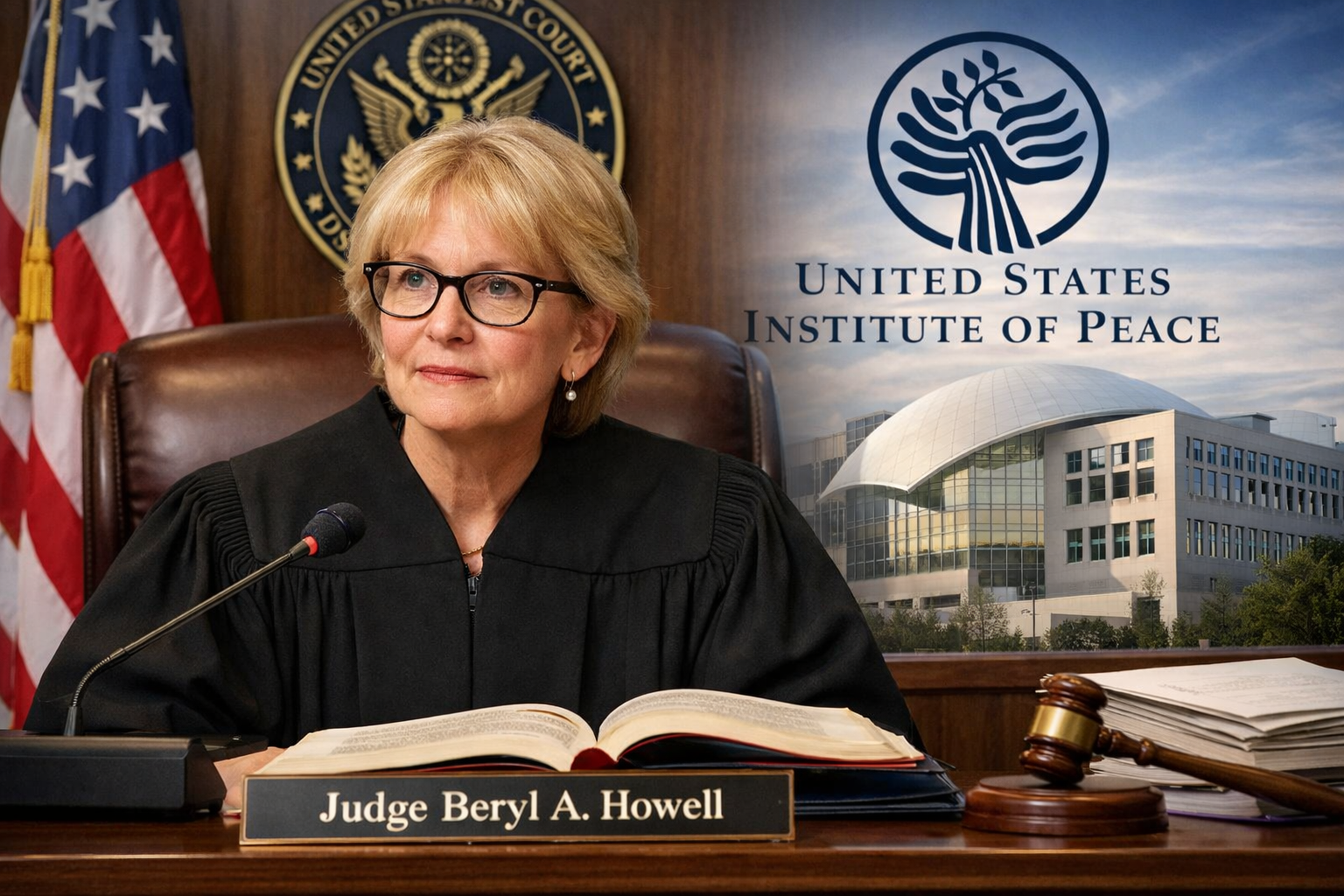
The keyword “Judge Howell USIP” didn’t emerge from thin air. It gained traction because it sits at the intersection of judicial authority, executive power, and the fragile independence of institutions that operate in politically sensitive spaces. When Judge Beryl A. Howell became involved in a legal dispute connected to the United States Institute of Peace (USIP), the case instantly attracted attention from legal scholars, policymakers, journalists, and civil society advocates alike.
At its core, the matter was not just about a judge howell usip issuing a ruling. It was about how American law treats quasi-independent institutions, what limits exist on executive interference, and how courts respond when governance norms are tested. Judge Howell’s role brought clarity, firmness, and a strict reading of statutory authority that resonated far beyond the walls of the courtroom.
This article takes a comprehensive look at Judge Howell’s involvement with USIP, the broader legal implications, the historical context, and why this episode continues to be cited in discussions about judicial independence and institutional governance. Whether you’re a legal professional, a policy enthusiast, or someone trying to understand why this case mattered so much, this guide is designed to give you the full picture — without legal jargon overload.
Who Is Judge Beryl A. Howell? Understanding the Judicial Mind Behind the Ruling
Judge Beryl A. Howell is not a newcomer to high-stakes legal decisions. As a former Chief Judge of the U.S. District Court for the District of Columbia, she has presided over some of the most politically sensitive cases in modern American history. Her judicial style is often described as meticulous, statute-focused, and unapologetically firm when it comes to constitutional boundaries.
Before ascending to the federal bench, Judge Howell served as general counsel for the U.S. Senate Judiciary Committee. That background gave her a rare insider understanding of how laws are written, interpreted, and sometimes stretched. It also explains why her opinions frequently emphasize legislative intent and statutory text rather than political convenience.
In the USIP-related case, those traits were on full display. Rather than deferring to executive preferences or institutional politics, Judge Howell focused squarely on what the law actually allowed. That approach became a defining feature of the “Judge Howell USIP” narrative and is a big reason the case continues to be referenced today.
What Is the United States Institute of Peace (USIP)?
To understand the controversy, you need to understand USIP itself. The United States Institute of Peace is a congressionally established, nonpartisan institution created to promote conflict resolution, peacebuilding, and diplomatic solutions worldwide. While funded by Congress, USIP operates independently from the executive branch.
This hybrid status — public funding with operational independence — is exactly what makes USIP unique and, at times, vulnerable. It is not a federal agency in the traditional sense, nor is it a private nonprofit. That gray area often leads to legal questions about oversight, authority, and control.
When disputes arise involving USIP, courts must carefully balance congressional intent, executive power, and institutional autonomy. Judge Howell’s handling of this balance is one of the most instructive aspects of the case tied to the “Judge Howell USIP” keyword.
The Legal Conflict: How Judge Howell Became Involved With USIP
The controversy that put Judge Howell and USIP in the same sentence revolved around governance authority and attempted leadership changes. At issue was whether external political actors had the legal authority to remove or replace USIP leadership without following statutory procedures.
Judge Howell was asked to determine whether these actions complied with the law establishing USIP. Rather than treating USIP as a political extension of the executive branch, she examined its founding statute in detail. Her conclusion was clear: Congress designed USIP to be insulated from unilateral executive control.
This interpretation was pivotal. It reinforced the Judge Howell USIP idea that not all federally funded institutions are subject to direct political reshuffling. The ruling emphasized that statutory safeguards matter — and that courts will enforce them when necessary.
Statutory Interpretation: Why the Text of the Law Mattered
One of the most powerful aspects of Judge Howell’s reasoning was her reliance on plain statutory language. She did not speculate about political motives or broader policy goals. Instead, she asked a simple but decisive question: What does the law actually say?
The statute governing USIP clearly outlines how leadership appointments and removals are to occur. Judge Howell concluded that bypassing those procedures was unlawful. This wasn’t a creative interpretation; it was a disciplined application of legislative text.
For legal professionals, this approach reinforced an essential principle: statutes are not suggestions. They are binding frameworks that define how institutions operate. The “Judge Howell USIP” case is now frequently cited as a textbook example of statutory fidelity.
Judicial Independence on Display
Judge Howell’s ruling also became a talking point in broader discussions about judicial independence. At a time when courts are often accused of political bias,Judge Howell USIP her decision stood out for its methodical, law-first reasoning.
She did not align herself with any political faction. Instead, she aligned herself with the statute and the Constitution. That distinction matters. It reminded observers that judicial independence isn’t about opposing or supporting political actors — it’s about enforcing legal boundaries regardless of who crosses them.
The USIP ruling reinforced public confidence in the judiciary’s ability to act as a check on overreach, a role that is fundamental to democratic governance Judge Howell USIP.
Executive Power vs. Institutional Autonomy
A major theme of the “Judge Howell USIP” discussion is the tension between executive authority and institutional autonomy. The executive branch often assumes broad control over federally funded entities, but Judge Howell’s ruling clarified that such assumptions are not always legally valid.
USIP’s structure was intentionally designed to limit political interference. Judge Howell recognized this design and enforced it. Her ruling sent a clear message: institutional independence is not symbolic — it is legally enforceable.
This has implications far beyond USIP. Other hybrid institutions now point to this case when asserting their autonomy, making Judge Howell’s decision influential well beyond its immediate context.
The Broader Impact on Federal Governance
The ripple effects of Judge Howell’s USIP ruling extended into broader conversations about federal governance. Legal analysts began reassessing Judge Howell USIP how other congressionally created institutions might be protected from political interference.
The case encouraged lawmakers to be more precise when drafting statutes and reminded executive actors that legal shortcuts can lead to judicial pushback. In that sense, the ruling strengthened the overall framework of checks and balances.
For governance scholars, the “Judge Howell USIP” case now serves as a practical example of how courts maintain institutional equilibrium within the federal system.
Media and Public Reaction
Public and media reaction to Judge Howell’s ruling was intense but varied. Legal commentators largely praised the decision for its clarity and adherence to statutory law. Some political voices criticized it as restrictive, while others celebrated it as a necessary Judge Howell USIP defense of institutional independence.
What stood out, however, was the lack of ambiguity in the ruling. Judge Howell left little room for misinterpretation. That decisiveness is part of why the case continues to be referenced in academic articles, legal briefings, and policy discussions.
Why the Case Matters Today
Even after the immediate controversy faded, the relevance of the “Judge Howell USIP” case remains strong. It is now frequently cited in discussions about:
Executive overreach
Institutional independence
Judicial enforcement of statutory boundaries
The role of courts in politically charged disputes
The case serves as a reminder that the rule of law is not abstract. It is enforced through specific decisions made by judges willing to apply the law consistently, even when doing so is controversial.
Judge Howell’s Judicial Philosophy in Context
This ruling fits neatly into Judge Howell’s broader judicial philosophy. She is known for decisions that emphasize accountability, transparency, and legal rigor. Whether dealing with congressional oversight disputes or institutional governance issues, her approach remains consistent.
The USIP case did not represent a departure from her judicial style — it was a continuation of it. That consistency has earned her respect across ideological lines, even among those who disagree with specific outcomes.
Lessons for Policymakers and Institutions
One of the most valuable takeaways from the “Judge Howell USIP” case is the importance of institutional design. When Congress creates entities with special governance structures, those structures must be respected.
Policymakers now reference this case when considering reforms or new institutional frameworks. It has become a cautionary tale against vague statutes and a reminder that legal clarity matters.
Legal Precedent and Future Implications
While the ruling may not have established binding precedent nationwide, it carries significant persuasive weight. Courts facing similar disputes often look to Judge Howell’s reasoning as a guide.
As debates over institutional independence continue, especially in polarized political environments, the principles articulated in this case are likely to resurface again and again.
The Human Element: Why Judicial Integrity Still Matters
Beyond statutes and governance frameworks, the “Judge Howell USIP” story highlights the human element of the judiciary. Judges are not robots. They bring experience, judgment, and integrity to the bench.
Judge Howell’s willingness to issue a clear, law-based ruling — regardless of political fallout — reinforced public trust in the judicial system. That trust is essential for democracy to function.
Comparing USIP to Other Hybrid Institutions
USIP is not alone in its hybrid status. Institutions like the Smithsonian and certain federal boards operate under similar frameworks. Judge Howell’s ruling has influenced how these entities assess their own governance protections.
By clarifying where executive authority ends, the case provided a roadmap for institutional self-defense rooted in law rather than politics.
Criticisms and Counterarguments
No major ruling escapes criticism, and this one was no exception. Critics argued that the decision limited executive flexibility and complicated administrative oversight.
However, Judge Howell anticipated these critiques in her reasoning. She acknowledged the tension but reaffirmed that legal constraints exist for a reason. Flexibility cannot come at the expense of statutory compliance.
Academic and Legal Commentary
Law reviews and academic journals quickly picked up on the case. Many praised it as an example of disciplined judicial reasoning. Others used it as a case study in separation-of-powers analysis.
The keyword “Judge Howell USIP” now appears frequently in scholarly discussions, cementing its place in contemporary legal discourse.
What This Case Teaches About Democracy
At its heart, the Judge Howell USIP ruling is about democratic accountability. Institutions created by elected representatives must operate according to the rules those representatives establish.
When those rules are ignored, courts step in. That process is not a flaw in democracy — it is a feature.
Conclusion:
The phrase “Judge Howell USIP” represents more than a legal dispute. It symbolizes a moment when judicial clarity reinforced institutional integrity and reaffirmed the rule of law.
Judge Howell’s ruling reminded everyone — from policymakers to the public — that laws matter, statutes have meaning, and courts are willing to enforce them. In an era of constant political friction, that reminder is more valuable than ever.
This case will continue to be cited, studied, and debated, not because it was dramatic, but because it was principled. And in the long run, principled decisions are the ones that shape legal history.













Post Comment